

By Bonsai Expert Lloyd Noall, Bonsai Direct
Ever wondered how we know the ages of our bonsai trees at Bonsai Direct?
It’s a question we get asked surprisingly often — and a fair one too. After all, these little trees don’t come with birth certificates or baby photos (though we wish they did). But behind every bonsai’s age is a fascinating story — and sometimes a little detective work.
How We Know the Age of Our Bonsai
The good news is that, for a large proportion of our bonsai, we don’t need to guess.
That’s because many of our trees have been propagated right here at our Devon nursery — grown lovingly from seed, cuttings, or air layerings by our team (and occasionally, with Lloyd talking to them encouragingly over tea).
When we grow from scratch, we record the exact year each tree began its journey — whether it was the day a seed was sown or a cutting was taken from one of our parent specimens. This means we can confidently say, “This one’s 12 years old,” rather than “It looks about 12.”
And for the trees we don’t grow ourselves?
We import a small number of beautiful bonsai from trusted growers within Europe. These growers provide us with accurate age records, so even those that began life abroad come with a little bonsai biography.
We also make a conscious effort to update the ages of mature specimens annually on our website. So if you’ve been browsing and notice your favourite tree has gained a year — don’t worry, that’s just time doing its thing.
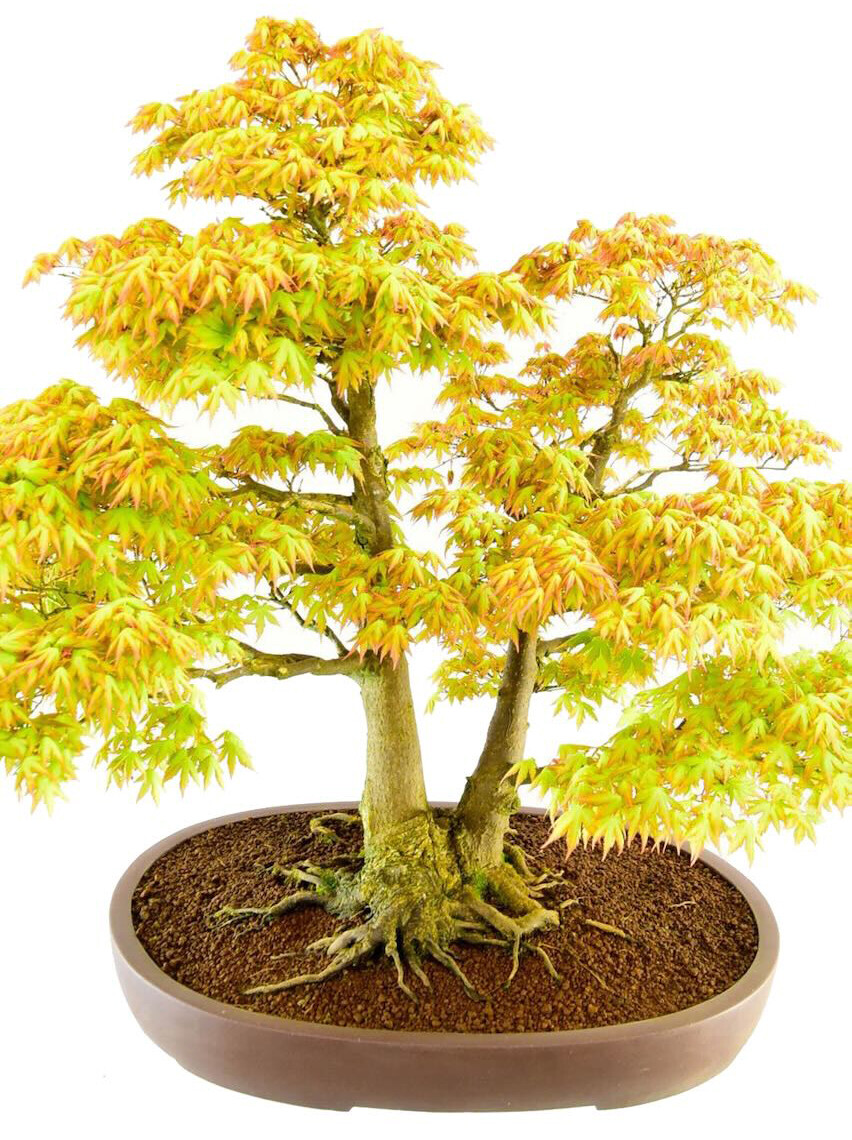
This bonsai is approximately 66 years old and was imported from Japan over 20 years ago
Why Some Bonsai Don’t Look Their Age
Now, here’s where it gets interesting (and occasionally confusing).
Sometimes, customers see a bonsai listed as “15 years old” and say, “Really? It looks about five!”
We completely understand — but bonsai trees, like people, don’t all age in the same way.
The secret lies in how the tree was grown in its early years:
- Field-grown bonsai or those started in larger pots grow quickly, thickening their trunks early. This gives them that “ancient tree in miniature” look even when they’re relatively young.
- Trees grown in small bonsai pots from the start, however, grow more slowly. They develop superb ramification (fine twiggy branching) and excellent taper over time — the hallmarks of high-quality bonsai — but they take their sweet time doing it.
So while one bonsai might look older because of its rugged trunk and broad base, another — grown delicately and patiently — might be twice its age but appear more refined and compact. It’s the botanical equivalent of two siblings where one’s off sprouting a beard at 14 and the other still looks angelic at 25.
If We Ever Forget, We Ask Lloyd
Now, we’d love to say every bonsai comes with a little birthday tag… but we’re only human.
On the rare occasion when we can’t find the record, there’s a simple solution: we ask Lloyd.
He’s spent nearly every waking hour on the nursery for decades, and he knows our trees personally — like old friends. (In fact, if you ever walk into the nursery early enough, you might catch him having a quiet chat with a Chinese Elm about its progress.)
If there’s anyone who can tell the difference between a 10-year-old and a 12-year-old bonsai at a glance, it’s Lloyd. He’s basically our in-house tree whisperer.
The Beauty of Bonsai Time
One of the most magical things about bonsai is how it reshapes our sense of time.
A 10-year-old bonsai doesn’t look like a “small tree” — it looks like a tree in miniature, with the wisdom and character of something far older. The patience it takes to nurture and shape a bonsai mirrors the patience it teaches in return.
At Bonsai Direct, we take pride not just in knowing the age of our trees, but in understanding their stories. Every branch, every curve, every scar tells a tale — and that’s worth far more than the number of years on the label.
Bonsai time moves slowly — and that’s exactly the point.
Each year adds another layer of beauty, character, and story. So next time you’re admiring one of our bonsai trees, remember: age is just one part of the art — patience, love, and a good pruning snip do the rest.
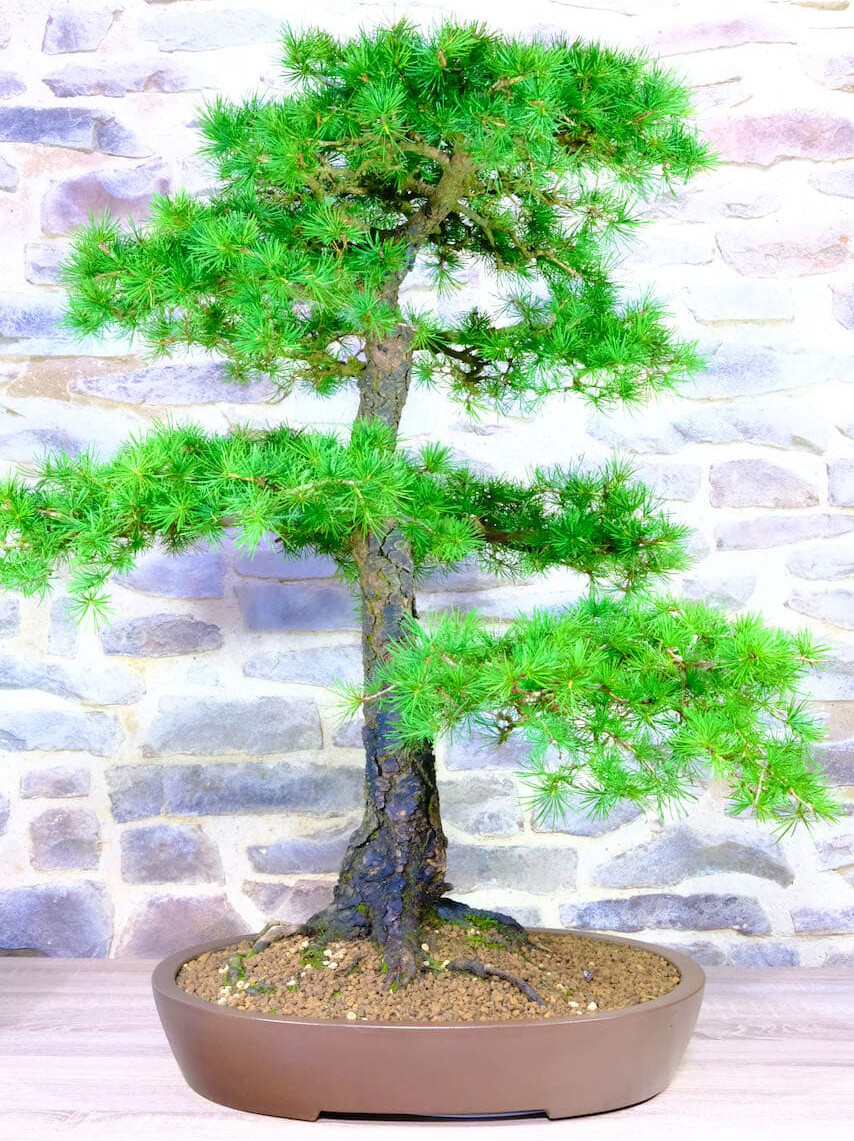
This is a Larch (Larix) bonsai grown by Lloyd from a cutting. It is nearly 40 years old and stands 93cm in height. It’s one of the oldest ‘home grown’ bonsai that we have.
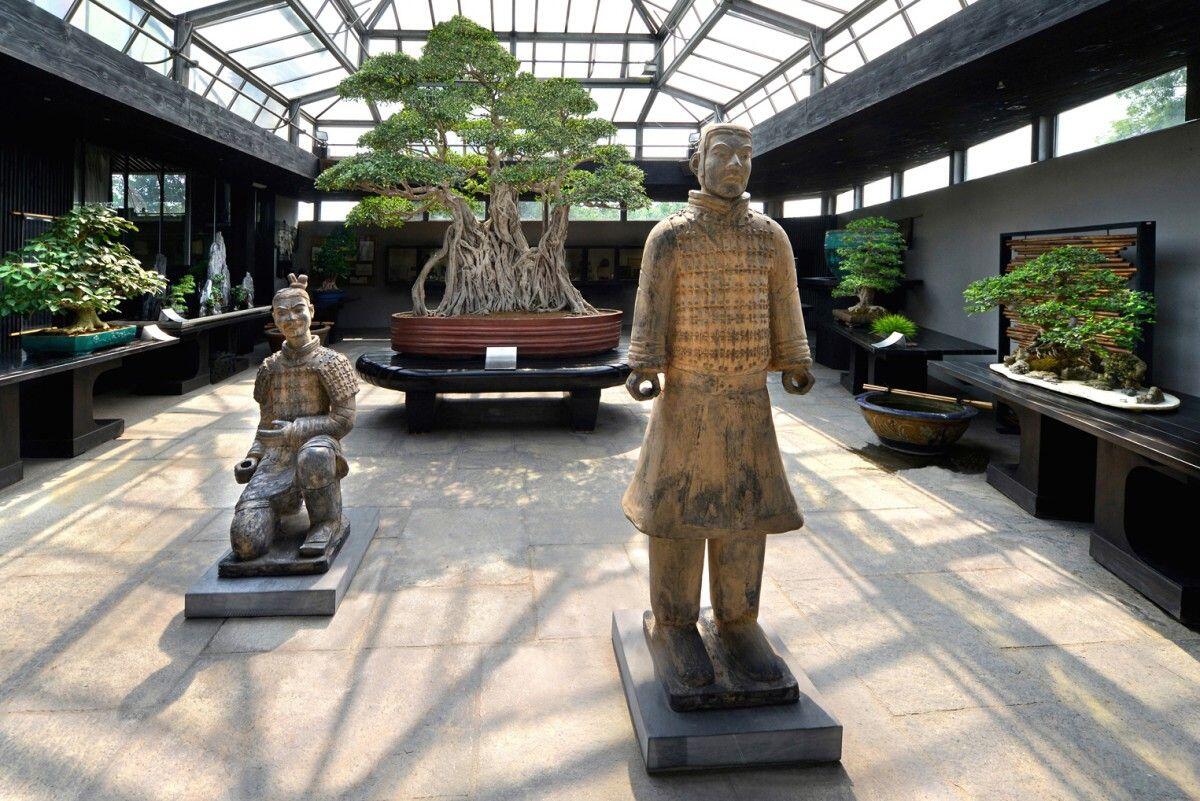
A Living Legend: The Ancient Ficus Bonsai at the Crespi Centre Showing True Bonsai Age
To put bonsai age into perspective, one of the oldest known bonsai trees in the world is the Ficus retusa Linn displayed at the Crespi Bonsai Museum in Italy. Believed to be over 1,000 years old. This incredible tree has a gnarled, twisting trunk and vast root base that tells a story spanning centuries. The Ficus Bonsai was originally cared for by Chinese masters before being brought to Italy. It now resides in a striking glass pagoda built especially for it — a true temple for a living work of art.
What’s most fascinating is that, despite its immense age, the tree still flourishes with new growth and vitality. A perfect reminder of bonsai’s timeless beauty and resilience. It shows that with patience, care, and respect for nature’s rhythm, bonsai trees don’t just grow older — they grow wiser.
I have been lucky enough to see this bonsai tree – it is as impressive as it looks. Lloyd and I visited the Crespi centre many years ago in the 1990’s!


0 replies